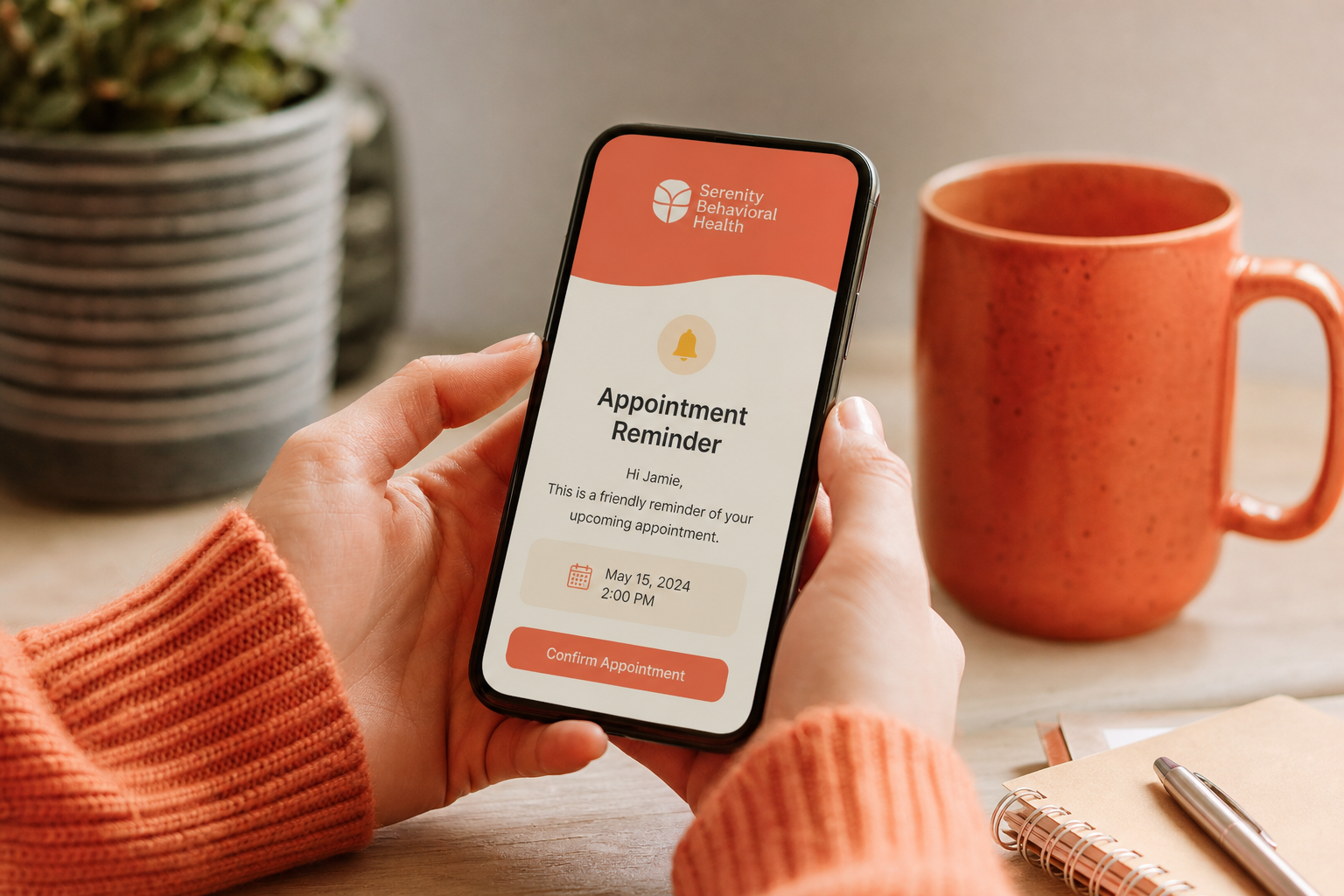
Behavioral health practices face a particular version of the no-show problem. A missed appointment isn't just a scheduling gap. For many patients, it's a sign of avoidance, anxiety, or a crisis in progress. That reality makes some practices hesitant to use appointment reminders, worried that automated outreach feels impersonal or risks exposing sensitive information. Practices that reduce patient no-shows with well-designed reminder systems see measurable gains in continuity of care without losing the human touch. This post addresses the objections we hear most often and what happens when those concerns are tested against real workflows.
"Reminders Will Compromise Patient Privacy"
This is the most common objection we hear from behavioral health administrators, and it's a reasonable one. A text message that says "Reminder: Your appointment with Dr. Smith, Behavioral Health Associates" sitting on a shared family phone can create real exposure. Control what reminders say.
Neutral Language by Design
DoctorConnect's reminder templates are configurable at the practice level. Behavioral health clients routinely strip out provider specialty, diagnosis-adjacent language, and even the practice name, replacing it with a neutral identifier and a callback number. Patients confirm or reschedule without a word on the screen that reveals the nature of the visit. This adjustment resolves the privacy objection in the vast majority of cases we've implemented.
Consent and Channel Preference
Every practice using DoctorConnect operates under a signed BAA, and PHI tied to reminder delivery is hosted in U.S. data centers on SOC 2 Type II audited infrastructure. Patients choose their preferred channel, text, email, or voice, and that preference is documented at intake. A patient who doesn't want text reminders because of a shared device gets a phone call instead. This is a standard configuration step during onboarding, typically completed in the first week.
"Patients Will Tune Out Too Many Messages"
Message fatigue is a legitimate concern, especially for patients in intensive outpatient programs who may be managing reminders for therapy, medication checks, and group sessions in the same week. The objection is usually about frequency and tone becoming noise.
Cadence Matters More Than Volume
Practices that reduce patient no-shows most effectively send the right messages at the right intervals. A typical behavioral health configuration on DoctorConnect uses a 72-hour and a 24-hour touchpoint, with a same-day reminder reserved for high-risk no-show patterns identified by appointment history. This avoids daily pings and respects the reality that behavioral health patients are often juggling more logistical and emotional demands than a typical primary care patient.
Letting Patients Set the Rhythm
Where clinically appropriate, some practices give patients the option to adjust reminder frequency themselves, through a simple reply or portal toggle that reduces volume without eliminating the safety net. This isn't a default feature turned on everywhere. It's a configuration decision practices make deliberately, usually after watching initial no-show data for 30 to 60 days.
"Reminders Won't Work for Patients With Complex Needs"
This objection carries real clinical weight. Patients managing severe depression, active substance use, or significant cognitive load may not respond to a reminder the way a routine dental patient would. Some practice leaders conclude that reminders are therefore a lower priority for this population. The data doesn't support that conclusion, but it does support adjusting expectations about what a reminder is supposed to accomplish.
Reminders as a Bridge, Not a Fix
A reminder isn't a clinical intervention. It is a logistical nudge that removes the lowest-effort reason for missing care: forgetting. For a patient already managing significant barriers, reducing one barrier still matters. Practices that reduce patient no-shows in this population typically pair automated reminders with a live front-desk follow-up call for patients flagged as high-risk, rather than relying on automation alone for every case.
Implementation reality: In practice, the rollout rarely goes perfectly on day one. We've seen behavioral health clients discover in week two that their intake form never asked patients about reminder preference, or that a shared-phone household got three weeks of appointment texts before anyone flagged it. The practices that get the most value treat the first 30 days as a calibration period, watching which templates get the most confirmations, which patients opt out, and adjusting cadence accordingly, rather than assuming the default settings are the final configuration. That's a normal part of onboarding, not a failure of the system.
"We Don't Have Staff Bandwidth to Manage Another System"
This objection is less about reminders themselves and more about the fear of adding administrative overhead to already-stretched front-desk teams.
Integration, Not Addition
DoctorConnect connects with more than 150 EHR and practice management systems, so reminder scheduling pulls directly from the existing appointment calendar, with no duplicate data entry or second system to monitor. For most behavioral health practices, the reminder workflow is live within two to three weeks of signing, with staff training requiring a single session rather than an ongoing learning curve.
Behavioral health practices that reduce patient no-shows address the specific objection in front of them, privacy, fatigue, complexity, or staff bandwidth, with configuration rather than avoidance. DoctorConnect has supported more than 500 active practices through this kind of calibration. Thoughtful setup beats blanket skepticism every time.
DoctorConnect has helped medical practices reduce patient no-shows since 2009. Talk to our team about your specific workflow.