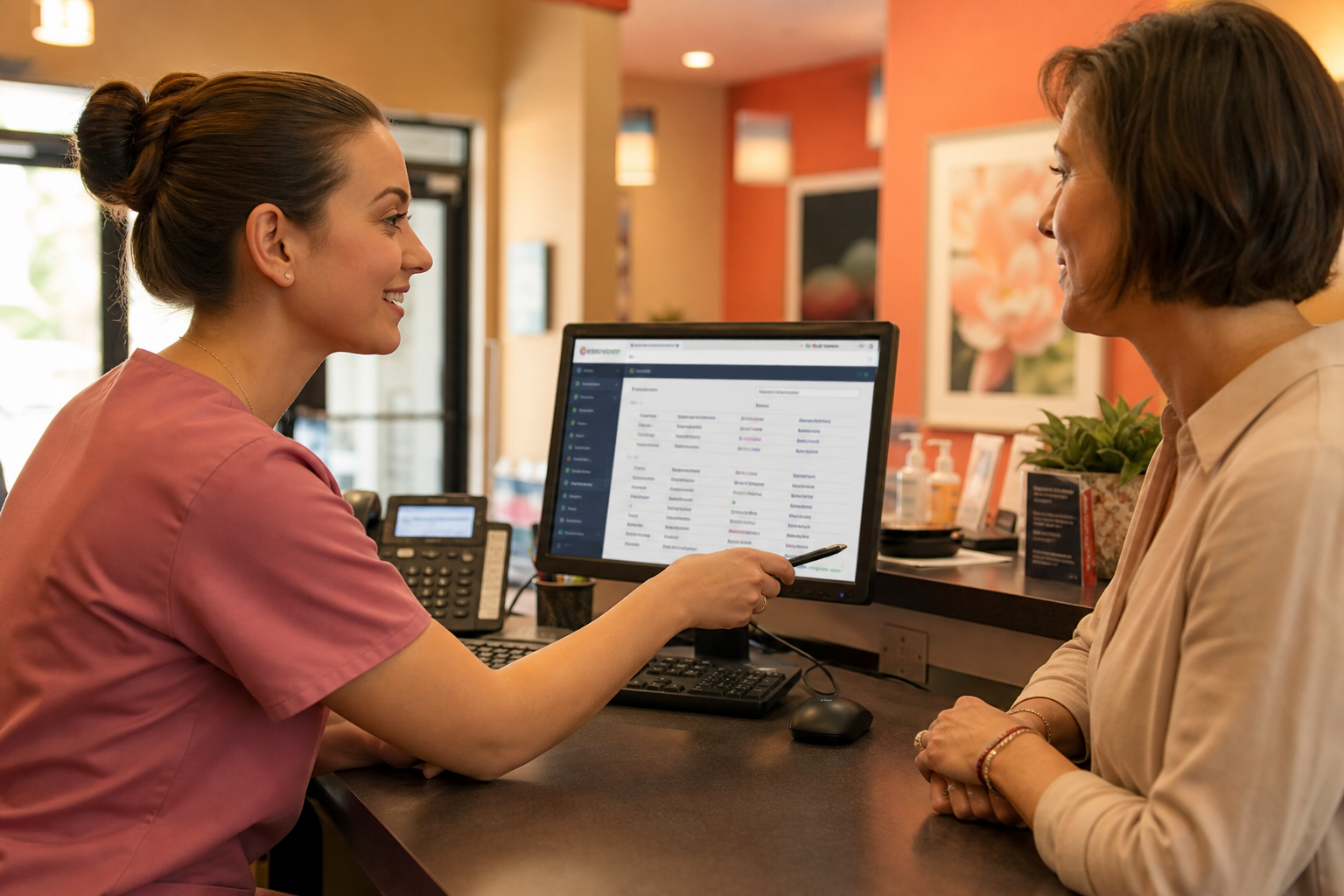
Patient management software has become a deciding factor in whether a patient's experience feels modern and easy or outdated and frustrating. Practices that still rely on phone-tag scheduling, paper clipboards, and manual reminder calls are losing patients to competitors down the street who've digitized the journey, often without realizing it. Patients notice the difference between booking an appointment in ten seconds online and waiting on hold for ten minutes. This post walks through what patients experience at each step of a visit when a practice runs on modern patient management software, and what that means for the staff managing it behind the scenes.
Online Booking: The First Impression That Sets the Tone
The patient journey no longer starts in the waiting room. It starts on a phone screen, usually after hours, when a patient decides they need an appointment. Practices we work with report that a sizable share of booking activity happens outside normal business hours, when front-desk staff aren't available to answer the phone. Patient management software with 24/7 online scheduling captures those patients instead of losing them to a competitor whose website makes booking easier.
What Patients See
A clean booking interface showing real provider availability, instant confirmation, and the ability to pick a time without ever speaking to a human. For many patients, especially younger ones, this is the baseline expectation.
What Staff Gain
Fewer inbound scheduling calls mean front-desk teams spend less time on logistics and more time on patients physically in front of them. That's a direct labor efficiency gain.
Digital Check-In: Removing Friction Before the Visit Begins
Paper clipboards and repetitive intake forms are common sources of patient irritation and easy to fix. Patient management software that supports digital check-in lets patients complete insurance verification, update demographic information, and fill out intake forms from their phone before they walk through the door.
Shorter Waiting Room Time
When intake is handled digitally in advance, the in-office check-in process shrinks to a signature and a seat. That reduction in perceived wait time consistently correlates with higher satisfaction scores, regardless of how long the clinical visit itself runs.
Cleaner Data for Staff
Front-desk staff stop re-keying handwritten forms into the EHR, which cuts transcription errors and speeds up the handoff to clinical staff. With patient management software integrated into 150+ EHR and practice management systems, that data flows into the existing record without a separate manual step.
Implementation reality: digital check-in rollouts rarely fail because of the technology. They fail because front-desk staff don't trust the new process yet and revert to handing out the clipboard "just in case." Practices that see the fastest adoption retire the paper option entirely within the first few weeks, rather than running both systems in parallel indefinitely. A phased cutover with a firm end date works better than an open-ended pilot.
Automated Reminders: Reducing No-Shows Without Adding Staff Workload
No-shows and late cancellations are a direct revenue leak, and they're also a patient experience problem. Patients who miss appointments because they forgot may feel embarrassed calling back to reschedule. Patient management software that automates appointment reminders through text, email, or voice closes that gap without requiring a staff member to make an outbound call.
Multi-Channel Reminders Patients Respond To
Text reminders with one-tap confirmation links tend to outperform phone calls for response rate because they meet patients where they already are. Practices that layer in a second reminder closer to the appointment time typically see measurable drops in no-show rates.
Two-Way Communication Helps Fill Open Slots
When a reminder allows a patient to confirm, reschedule, or cancel directly from the message, the practice recovers that appointment slot early enough to fill it with another patient. Early cancellation gives the practice time to fill the slot rather than lose the revenue from a no-show.
Post-Visit Follow-Up: Where Patient Experience Is Won or Lost Long-Term
The visit doesn't end when the patient walks out, and practices that treat it that way are leaving satisfaction and retention on the table. Patient management software extends the relationship past checkout with automated follow-up messages, satisfaction surveys, recall reminders for preventive care, and review requests sent at the right moment.
Recall and Retention
Automated recall messages for annual visits, screenings, or follow-up labs keep patients engaged with the practice instead of drifting to whichever provider sends the next reminder first. This supports retention.
Reputation Management as a Byproduct
Review requests sent immediately after a positive visit experience, while satisfaction is high, generate far better response rates than generic requests sent weeks later. Practices running this as an automated step in their patient management software workflow build review volume steadily, without staff having to remember to ask.
Every one of these touchpoints, booking, check-in, reminders, and follow-up, used to be a separate manual task owned by a different staff member, with separate chances for something to fall through the cracks. The practices pulling ahead are the ones that have consolidated these touchpoints into a single connected patient management software platform rather than stitching together point solutions. That consolidation lets a small front-desk team support patient volume that would have required additional headcount five years ago.
DoctorConnect has helped medical practices improve the patient experience from start to finish since 2009. Talk to our team about your specific workflow.