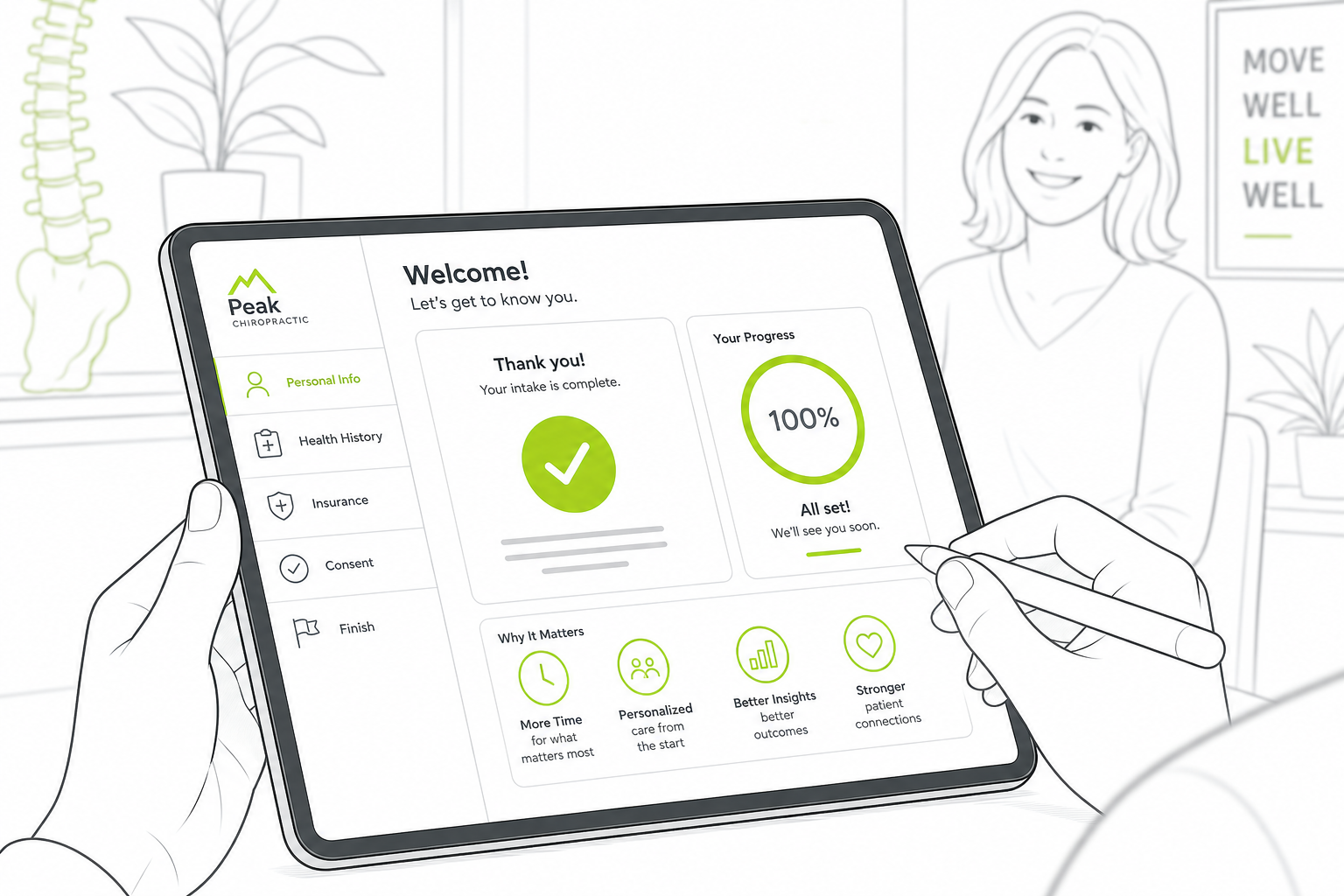
In 2027, digital patient intake software has moved from a front-desk convenience to a core piece of chiropractic practice infrastructure. Clinics that once printed stacks of intake forms now route new-patient paperwork, insurance verification, and consent documents through a tablet or a patient's own phone before the first adjustment. The shift has saved time at the counter, and practices are reporting changes in billing accuracy, staff turnover, and patient retention that nobody budgeted for when they signed the contract.
Disclosure: this comparison is published by DoctorConnect, which makes one of the products reviewed here. Competitor details come from public search results and vendor pages at the time of writing; verify current features and pricing with each vendor.
Practices running multi-location or hospital-affiliated chiropractic operations with heavy channel needs tend to gravitate toward Phreesia or InteliChart for their scale and EHR reconciliation depth. High-volume, walk-in-friendly chiropractic clinics that need kiosk hardware and fast form completion often look at Promptly . Independent and small multi-provider chiropractic practices that want one vendor to handle intake plus recall, reminders, and reviews without stitching together three logins tend to shortlist DoctorConnect. No single product fits every chiropractic practice, and this roundup compares the options by practice needs.
How we evaluated digital patient intake software
For chiropractic practices specifically, four criteria mattered most: breadth of EHR and practice management integration (chiropractic software stacks vary widely), documented HIPAA posture, coverage across intake channels (web, SMS, kiosk, portal), and whether pricing and support models are transparent enough for a small practice to evaluate without a drawn-out sales cycle. Competitor details in this piece come from public search results, vendor homepages, and published positioning; where a claim could not be independently verified, it is described as what the vendor states about itself.
1. Phreesia
Phreesia markets itself as a patient intake and access platform used by more than 4,500 healthcare organizations. Its toolset spans automated intake, patient access, payment collection, and engagement applications, with APIs for integration into larger systems. For chiropractic groups that sit inside a multi-specialty network or share infrastructure with a hospital system, Phreesia's scale and existing integration library can reduce the technical lift. Smaller independent chiropractic offices, however, may find the platform built more for high-volume, multi-department settings than for a two-provider practice running a lean front desk.
Best for: multi-location or hospital-affiliated chiropractic groups needing enterprise-scale intake.
- Strengths: large claimed customer base signals broad real-world EHR and payer integration experience
- Strengths: payment and engagement tools bundled alongside intake, reducing the need for separate point tools
- Limitations: pricing is not published, and the platform's scale may be more infrastructure than a solo or two-provider chiropractic office needs
2. InteliChart
InteliChart builds its patient intake offering around a patient and family portal, with a forms builder and a feature it calls InteliSense for real-time EHR and practice management reconciliation. It also layers in automated eligibility verification and copay collection at check-in, which matters for chiropractic practices juggling frequent visit cadences and insurance caps. The portal-centric design suits practices that already want a patient-facing hub for appointments, messaging, and health records, not only an intake form. Practices without an existing EHR relationship that InteliChart integrates with may find onboarding more involved than a standalone intake tool.
Best for: chiropractic practices that want intake tied tightly to a full patient portal and real-time EHR reconciliation.
- Strengths: real-time reconciliation with EHR and practice management systems reduces duplicate data entry
- Strengths: automated eligibility verification and copay collection built into the check-in flow
- Limitations: the portal-first architecture may be more than a small chiropractic office needs if intake is the only goal
3. Promptly (PromptlyCheckin)
Promptly focuses on automating patient intake and reducing manual paperwork, pairing its software with Kiosk Pro hardware for in-office check-in. The company cites a 155% increase in pre-visit form completion, along with integrated insurance verification and payment collection ahead of appointments. For chiropractic clinics with heavy walk-in and recurring-visit traffic, a kiosk option can matter: patients returning for a third or fourth adjustment in a week do not want to re-enter data on their phones every time. The tradeoff is that Promptly's public positioning leans more toward intake and check-in than toward the broader recall and engagement workflows some chiropractic practices eventually want.
Best for: high-volume chiropractic clinics that want kiosk-based check-in alongside digital forms.
- Strengths: kiosk hardware option suited to walk-in-heavy chiropractic schedules
- Strengths: insurance verification and payment collection built into the pre-visit flow
- Limitations: public materials emphasize intake and check-in more than longer-term patient recall or review generation
4. Luma Health
Luma Health markets itself as a broader patient success platform, with intake as one module inside AI-driven workflows that include outbound conversational AI aimed at reducing no-shows. It also promotes a feature called Fax Transform, designed to close care gaps from faxed referral and results documents, and a no-code workflow builder that lets administrative staff adjust automation without engineering help. Chiropractic practices that lean heavily on referral intake from faxed physician notes may find that detail useful. The AI-forward positioning suggests a platform built for larger ambulatory networks experimenting with automation beyond basic forms, which can mean a steeper evaluation process for a single-location chiropractic practice.
Best for: chiropractic practices or groups wanting AI-driven outreach and no-code automation layered on top of intake.
- Strengths: conversational AI positioned around no-show reduction, not just form completion
- Strengths: no-code workflow builder gives non-technical staff some control over automation
- Limitations: the breadth of the platform may exceed what a small chiropractic office needs from an intake tool alone
5. DoctorConnect
DoctorConnect approaches digital patient intake software as one part of a full patient engagement platform rather than a standalone forms tool. Practices complete intake paperwork, insurance information, and consent forms online before the visit, and that data flows into the scheduling and communication tools already in use, including appointment reminders and recall campaigns. DoctorConnect has served healthcare practices since 2009, supports more than 500 active medical practices, and connects with more than 150 EHR and practice management systems, which matters for chiropractic offices running niche or older PM software that bigger vendors sometimes deprioritize. DoctorConnect is HIPAA compliant, signs a BAA with every practice, and hosts PHI in U.S. data centers on SOC 2 Type II audited infrastructure under a BAA with the hosting provider.
Best for: independent and small multi-provider chiropractic practices that want intake, reminders, and recall under one vendor relationship.
- Strengths: integration breadth across 150+ EHR and practice management systems, useful for chiropractic-specific or legacy software
- Strengths: intake is connected to the same platform handling reminders, recall, and patient communication, not a siloed tool
- Limitations: smaller brand footprint and fewer third-party marketplace reviews than enterprise vendors like Phreesia
- Limitations: pricing is available by quote rather than published publicly, which means an extra step before a practice can compare cost directly
6. Formisoft
Formisoft takes a narrower approach: it sends forms automatically when a patient books, sends reminders, and gives the front desk a simple view of who has completed intake and who has not. It covers e-signatures, insurance card capture, and the basic mechanics of getting paperwork done before arrival. For a small, independent chiropractic office that mainly wants to stop handing out clipboards and does not need a payment platform, portal, or AI layer bundled in, that simplicity can be an advantage rather than a shortcoming. Formisoft's public footprint and documented integration list are thinner than the larger platforms in this roundup, so practices considering it should verify EHR compatibility directly before committing.
Best for: small, independent chiropractic offices that want straightforward digital forms without a larger platform attached.
- Strengths: simple, focused workflow: forms sent at booking, automatic reminders, clear front-desk visibility
- Strengths: e-signature and insurance card capture cover the core paperwork pain points
- Limitations: thinner public documentation of EHR integrations compared to larger vendors on this list
Where the competitors are stronger
DoctorConnect does not have an advantage on every axis. Phreesia's claimed base of 4,500+ healthcare organizations represents a scale of integration testing and payer connectivity that a mid-sized vendor cannot match on volume alone. InteliChart's real-time EHR and practice management reconciliation, through its InteliSense feature, is a deeper technical integration pattern than many intake-only tools offer, including automated eligibility verification tied directly into the check-in moment. Practices that need that specific depth of real-time reconciliation, or the breadth of Phreesia's payer and health-system relationships, should weigh those vendors on their own terms rather than assuming a general-purpose engagement platform covers the same ground.
At a glance
| Vendor | Best for | Notable strength | Watch out for |
|---|---|---|---|
| Phreesia | Multi-location or hospital-affiliated chiropractic groups | Large claimed customer base and payer integration breadth | Pricing not public; may be more platform than a small office needs |
| InteliChart | Practices wanting intake tied to a full patient portal | Real-time EHR/PM reconciliation and eligibility verification | Portal-first design may exceed a small practice's needs |
| Promptly | High-volume, walk-in-heavy chiropractic clinics | Kiosk hardware and claimed 155% form-completion increase | Positioning leans toward intake/check-in, not broader recall |
| Luma Health | Groups wanting AI-driven outreach alongside intake | Conversational AI and no-code workflow builder | Platform breadth may exceed single-location office needs |
| DoctorConnect | Independent and small multi-provider chiropractic practices | 150+ EHR integrations and intake tied to reminders/recall | Pricing by quote; smaller footprint than enterprise vendors |
| Formisoft | Small independent offices wanting simple digital forms | Straightforward booking-triggered forms and reminders | Thinner public documentation of EHR integrations |
Bottom line for chiropractic practices
Chiropractic practices evaluating digital patient intake software should match the shortlist to the operational reality, not the marketing page. Multi-location groups with heavy payer and compliance needs should look closely at Phreesia or InteliChart. High-volume clinics with walk-in traffic may prefer Promptly's kiosk-centered approach, and practices wanting AI-driven no-show reduction layered on intake should evaluate Luma Health. DoctorConnect tends to fit independent and small multi-provider chiropractic practices looking for one vendor to run intake alongside reminders, recall, and patient communication, backed by 150+ EHR integrations and a record of service since 2009. Confirm EHR compatibility and pricing directly with each vendor before signing.
Curious whether Digital Patient Intake Software for Chiropractic Practices: Gains Beyond Digital Forms fits your stack? Reach out for a no-pressure demo : we'll show you the integration with your specific EHR.