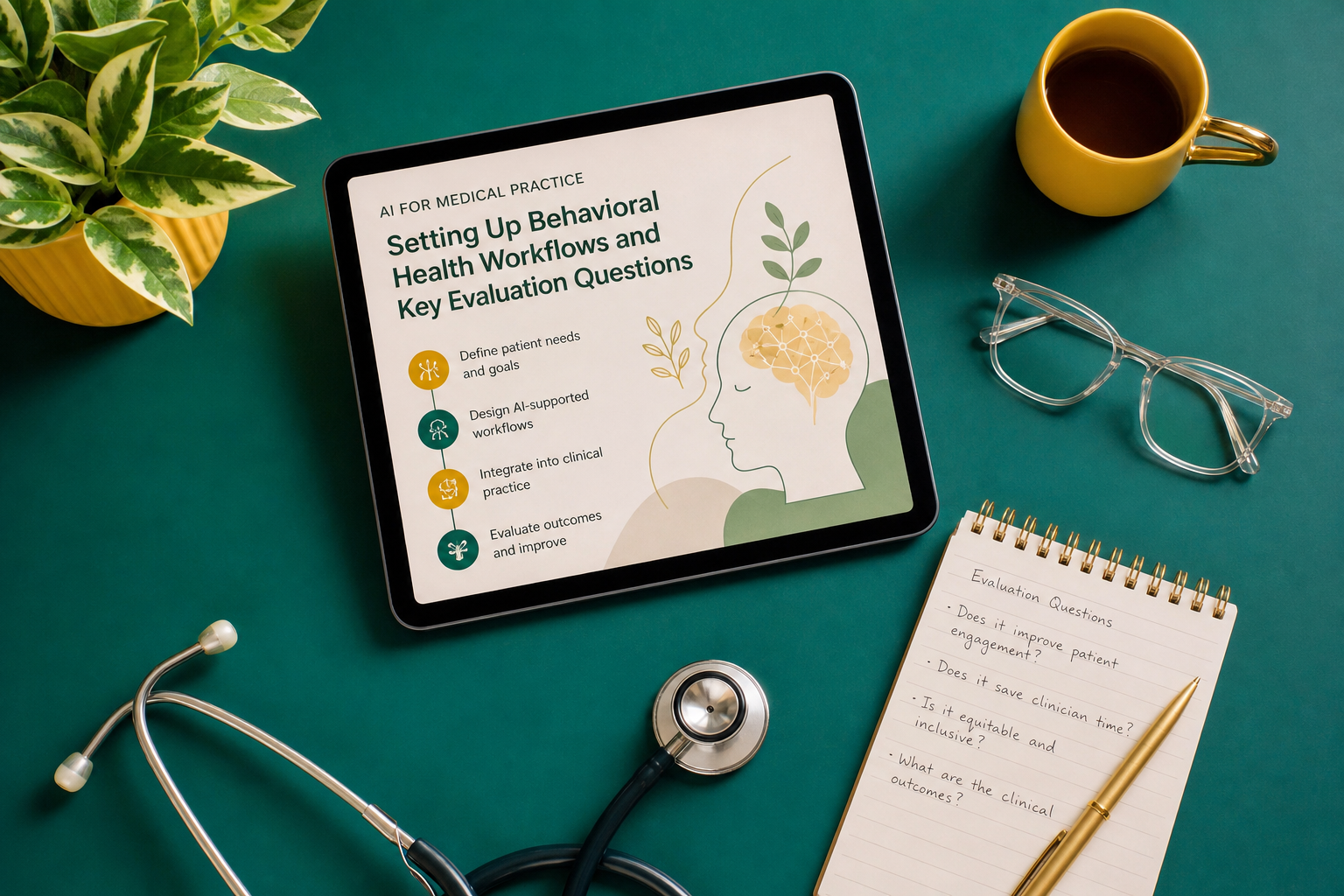
Behavioral health practices have good reason to be careful with ai for medical practice. Patient conversations often contain deeply personal information, schedules can change quickly, and even a small communication mistake can damage trust. The right AI setup should reduce administrative friction without treating sensitive care like a generic workflow problem. For behavioral health leaders, the question is whether the platform can support intake, outreach, documentation-adjacent processes, and care coordination while preserving privacy, clinical judgment, and the human tone patients expect.
AI for Medical Practice Starts With Workflow Design, Not a Feature Demo
When evaluating ai for medical practice, behavioral health teams should begin by mapping what happens before, during, and after an appointment. A platform cannot improve a process nobody has clearly defined. It can automate confusion quickly when the workflow is vague.
Map the patient journey from first contact to follow-up
Start with the operational moments that create the most staff work or patient drop-off. For many behavioral health practices, those moments include:
- Responding to new patient inquiries and referral requests
- Collecting registration details, insurance information, consent forms, and screening questionnaires
- Confirming appointment type, provider availability, and telehealth instructions
- Sending appointment reminders that are appropriate for the patient relationship and communication preferences
- Following up after missed appointments, incomplete forms, or care-plan milestones
- Routing nonclinical questions to the right staff member without implying clinical advice
An effective setup identifies which steps are administrative, which require clinician review, and which should never be delegated to automated messaging. AI can help classify incoming requests, suggest next steps, or reduce repetitive outreach work. Clinicians remain responsible for assessment, crisis response, and the therapeutic relationship.
Set boundaries before automation goes live
For ai for medical practice in behavioral health, guardrails are part of the implementation. Define escalation rules for language that may indicate safety concerns, establish who reviews exceptions, and make sure staff know when automated workflows stop and human intervention begins.
For example, an automated intake process may acknowledge a request and provide approved next steps. Messages involving self-harm, threats to others, medication emergencies, or urgent clinical symptoms need an explicit routing and response policy. The AI platform should support the practice's protocol.
Build Privacy and EHR Integration Into the Evaluation Criteria
Behavioral health records demand particular care. A vendor's polished interface does not answer key questions about where data goes, who can access it, how long it is retained, or whether staff can control the information used in automated workflows. AI for medical practice should be evaluated within the practice's privacy and operational environment.
Ask direct questions about protected health information
Before sharing PHI with any AI vendor, behavioral health leaders should ask for clear, specific answers:
- Will the vendor sign a Business Associate Agreement?
- What patient information enters the platform, and what information stays in the EHR or practice management system?
- Is PHI stored in U.S. data centers, and what security controls protect it?
- Is patient data used to train general-purpose models or shared beyond the practice's authorized use?
- Can the practice define retention, deletion, access, and audit-log requirements?
- How are user permissions managed for front-desk staff, clinicians, billers, and administrators?
DoctorConnect is HIPAA compliant and signs a BAA with every practice. PHI is hosted in U.S. data centers on SOC 2 Type II audited infrastructure under a BAA with the hosting provider. Privacy should be verified through documented safeguards, not an AI label and a reassuring stock photo.
Integration must support the staff's actual day
The value of ai for medical practice falls quickly when staff must copy information between systems, check several inboxes, or reconcile conflicting patient records. Ask whether the platform integrates with the EHR and practice management tools already in use, what information can move between systems, and whether the workflow creates a reliable record of outreach and patient responses.
DoctorConnect supports more than 150 EHR and practice management integrations. For behavioral health practices, that connectivity can help keep appointment communications and patient engagement work tied to the systems staff already rely on. Integration should reduce duplicate work and avoid creating another dashboard that someone checks only after the day has become interesting.
Implementation Reality: Sensitive Workflows Need Exception Handling
The test environment is usually quiet, organized, and populated with ideal examples. Production is where a patient uses a nickname, a parent responds from a shared phone, an intake form arrives after the appointment time, or a clinician changes availability between reminders. Behavioral health workflows need clear ownership for these exceptions. Effective implementation plans include staff training, approved message templates, escalation paths, reporting review, and a short pilot period before broad rollout. Automation should make the normal path easier while giving people a safe way to handle the unusual path.
Key Evaluation Questions for AI for Medical Practice Platforms
Choosing a platform is easier when the decision team evaluates measurable workflow fit rather than broad claims about intelligence. The following questions can help behavioral health administrators compare options without getting lost in buzzwords.
Questions about patient experience and clinical boundaries
- Can messaging be tailored by appointment type, provider, location, language, and patient communication preference?
- Can the practice approve message content and prevent automated responses from offering clinical advice?
- How does the system identify and route urgent or high-risk messages?
- Can staff pause, edit, or take over an automated conversation when context requires it?
- Does the workflow respect consent requirements for text, email, voice, and other outreach channels?
Questions about operations, accountability, and vendor partnership
- Which tasks are automated, and which still require staff review?
- What reporting shows appointment confirmations, response rates, incomplete intake steps, and follow-up outcomes?
- How are failed messages, duplicate records, opt-outs, and incorrect contact details handled?
- What implementation support and training are included for administrative and clinical teams?
- Can the vendor demonstrate relevant integrations and explain the limits of each connection?
- Is the vendor established enough to support the practice over time, rather than treating healthcare as a temporary market category?
DoctorConnect has served healthcare since 2009 and supports more than 500 active medical practices. As a U.S.-based, self-sustaining company, we offer patient engagement as a full platform. Practices can use it for communications, workflow reliability, integration planning, and privacy protections.
Measure Whether the Workflow Helps People, Not Just Whether It Runs
After launch, behavioral health leaders should track outcomes that reflect both efficiency and patient experience. Useful measures may include completed intake forms before appointments, confirmation rates, no-show rates, time spent on repetitive outreach, staff intervention volume, patient opt-outs, and response times for routed messages. Review a sample of real interactions regularly. A workflow can meet a technical metric while still sounding impersonal or creating confusion for patients.
The goal is to remove avoidable administrative burden so staff and clinicians can give attention where it is most needed. A platform that respects that distinction is more likely to earn adoption from the people expected to use it.
Behavioral health practices should approach AI with practical caution: define the workflow, protect PHI, verify integration details, establish clinical boundaries, and measure the experience after launch. A setup that helps administrative teams respond consistently while preserving clinician judgment and patient trust can support the work around care without obscuring responsibility for care itself. With clear governance and the right technology partner, practices can improve coordination without making sensitive patient communication feel automated for automation's sake.
Ready to see how DoctorConnect handles AI for Medical Practice in behavioral health workflows and evaluation questions for your practice? Book a 15-minute walkthrough .